
By Bigyan Khadka
Introduction
SEO for beginners can feel confusing when you first start blogging. Have you ever written a blog post that no one reads?
You worked hard. You shared useful information. But still, there were no visitors.
This usually happens when your website is not properly optimized for search engines.
That is where SEO for beginners becomes important.
Search Engine Optimization (SEO) is not magic. It is a simple skill that anyone can learn with the right guidance and practice.
In this guide, you will learn SEO for beginners in very simple words. You will understand how SEO works, how to use keywords properly, and how to optimize your content to rank on Google.
No technical confusion. No complicated language. Just clear and practical steps to help you grow your website traffic.
SEO for beginners is an essential skill for anyone who wants to grow a website. Learning SEO for beginners helps you understand how search engines work and how to improve your content for better rankings.
👉 Want to understand SEO clearly? Read this beginner-friendly guide:
https://bigyankhadkacom.com/what-is-seo/

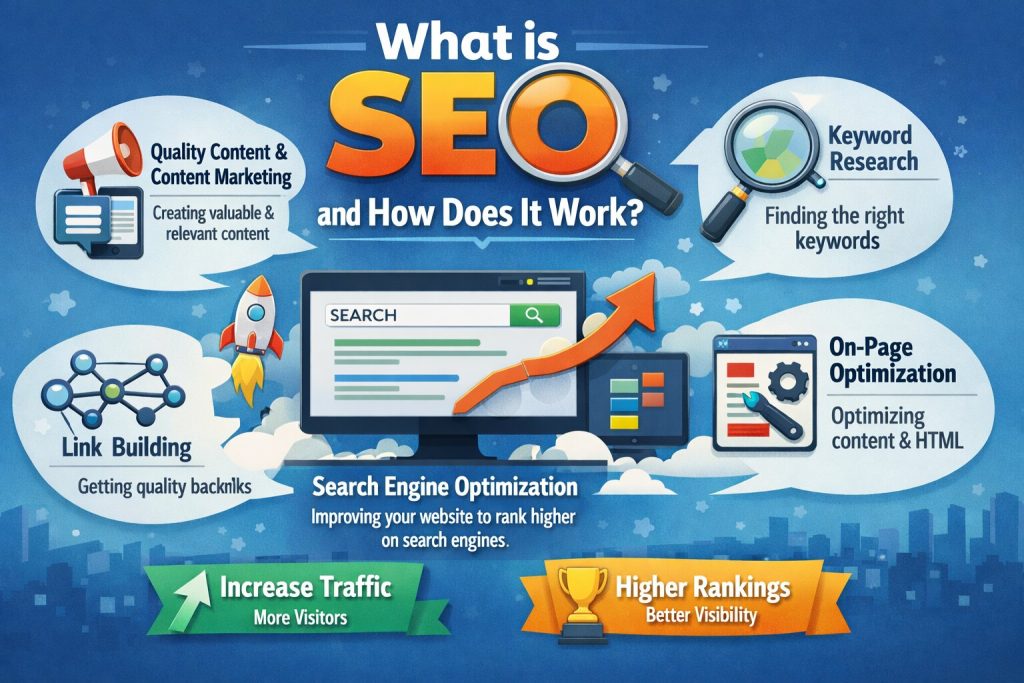
What Is SEO?
SEO stands for Search Engine Optimization.
In simple terms, SEO means helping search engines like Google understand your website and content. When your content is clear, useful, and properly optimized, Google can show it to people who are searching for that topic.
For example, if someone searches “how to start blogging,” Google will display websites that explain the topic clearly and provide helpful answers.
From my experience, websites that focus on clear explanations, proper keywords, and helpful content are more likely to rank higher on Google. This is why learning SEO is important for beginners.
If your content is well-structured and optimized, your website can also appear in search results and reach more people.
Why Is SEO Important?
SEO is important for three main reasons:
1. Free Traffic
One of the biggest benefits of SEO is that it brings free organic traffic.
You do not need to pay for ads. Once your website starts ranking on Google, visitors can find your content naturally. In my experience, this is one of the most powerful ways to grow a website long-term.
2. Trust and Credibility
Users trust Google’s top results.
When your website appears on the first page, people are more likely to see your content as reliable and trustworthy. High-ranking pages often have better content quality and user experience, which builds authority over time.
3. Long-Term Growth
Unlike paid ads, SEO continues to bring traffic over time.
Ads stop when you stop paying, but SEO can keep generating visitors for months or even years if you maintain your content and optimize it properly.
This makes SEO one of the most sustainable growth strategies for any website.

That is why many bloggers focus on SEO.
How Search Engines Work
Search engines like Google use bots called crawlers.
These bots:
- Visit websites
- Read content
- Store information
This stored data is called an index.
👉 Another trusted SEO resource you can explore: Search Engine Journal
When someone searches,
Google checks its index and shows the best results.
Google uses many ranking factors such as:
- Content quality
- Keyword usage
- Website speed
- Mobile friendliness
- Backlinks
Your job is to improve these areas step by step.
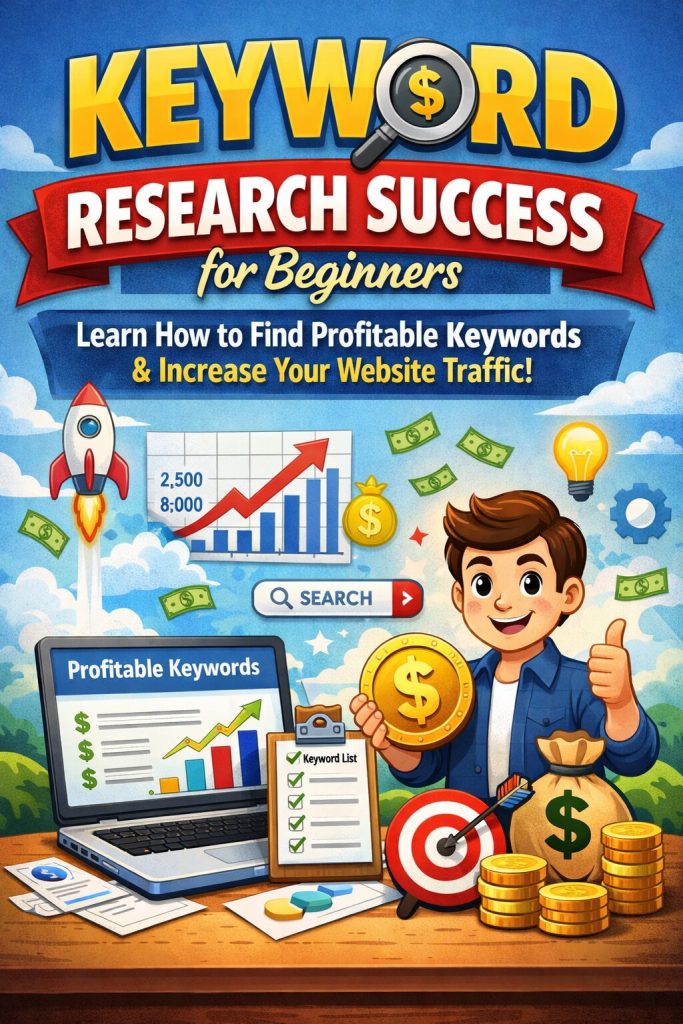
Step 1: Choose the Right Keyword
Before writing, you must choose a keyword.
A keyword is the word or phrase people type into Google.
Instead of choosing:
“SEO”
Choose something specific like:
“SEO for beginners step by step”
This is called a long-tail keyword.
Long-tail keywords are easier to rank for.
They have:
- Lower competition
- Clear search intent
- Better targeting
For beginners, this is the best strategy.
Step 2: Write High-Quality Content
Content is the heart of SEO.
Google prefers content that is:
- Helpful
- Clear
- Original
- Easy to read
Use short paragraphs.
Use simple words.
Avoid complex sentences.
For example:
Bad:
Search engine optimization is a multifaceted digital marketing methodology.
Good:
SEO helps your website appear on Google.
Simple always wins.
Step 3: Use Proper Headings
Headings help both readers and Google.
Structure your blog like this:
H1 – Main title (only once)
H2 – Main sections
H3 – Sub-sections
Clear structure improves readability.
It also improves SEO.
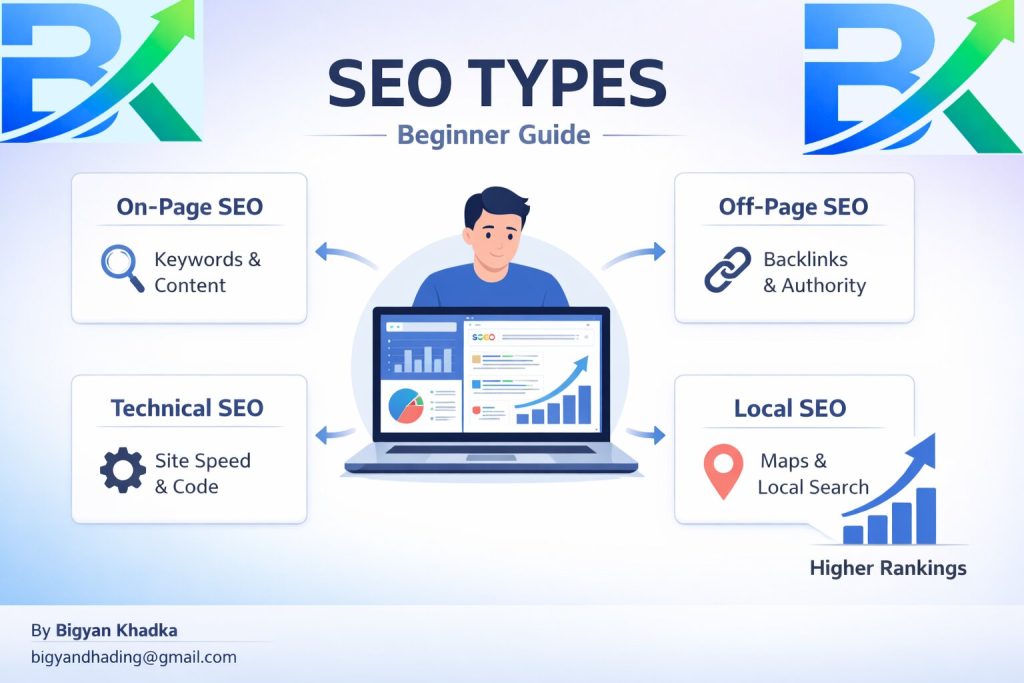
Step 4: Optimize On-Page SEO
On-page SEO means optimizing things on your website.
Here are the basics:
Title Tag
Keep it under 60 characters.
Include your main keyword.
Meta Description
Write 150–160 characters summary.
Make it attractive so people click.
URL
Keep it short and clean.
Example:
yourwebsite.com/seo-for-beginners
Images
Add alt text to describe images.
This helps Google understand them.

Step 5: Improve User Experience
Google cares about user satisfaction.
Make sure:
- Your website loads fast
- It works on mobile
- Text is easy to read
- No broken links
If users leave quickly,
Google notices.
So focus on experience.
Step 6: Build Backlinks
Backlinks are links from other websites to yours.
Google sees backlinks as votes.
The more quality votes you have,
the more trust your site builds.
You can get backlinks by:
- Writing helpful content
- Guest posting
- Sharing on social media
- Creating useful guides
Do not buy fake backlinks.
That can harm your site.
Common SEO Mistakes Beginners Make
Avoid these common errors:
- Copying content
- Keyword stuffing
- Writing long boring paragraphs
- Ignoring mobile optimization
- Expecting fast results
SEO is a long-term strategy.
Usually, it takes 3 to 6 months to see strong results.
Be patient.
How Long Does It Take to Rank?
Many beginners ask this question.
There is no exact timeline.
But generally:
- Low competition keywords: 2–3 months
- Medium competition: 4–6 months
- High competition: 6+ months
Consistency is key.
If you publish quality content regularly,
your chances increase.
👉 Learn why SEO is important for websites (complete guide):
https://bigyankhadkacom.com/why-seo-is-important-for-websites/
Simple SEO Checklist Before Publishing
Before you publish your blog, check:
✔️ Is the main keyword in the title?
✔️ Did you use short paragraphs?
✔️ Are headings clear?
✔️ Is the content original?
✔️ Did you add internal links?
✔️ Is the website mobile-friendly?
If yes, you are on the right path.
Frequently Asked Questions (FAQs)
What is SEO for beginners?
SEO for beginners means learning how to optimize your website to rank higher on Google.
How long does SEO take to work?
SEO usually takes 3 to 6 months to show results depending on competition.
Is SEO free?
Yes, SEO can be done for free using organic methods.
Final Thoughts
SEO is not as complicated as it may seem at the beginning.
At its core, SEO is about understanding what people are searching for and creating content that provides clear, helpful, and relevant answers.
From my experience, when you focus on writing helpful content instead of trying to “trick” search engines, your chances of ranking naturally improve over time.
To succeed in SEO, you should focus on a few key areas:
- Understanding the right keywords
- Writing high-quality and helpful content
- Structuring your blog in a clear and organized way
- Improving user experience, such as readability and page speed
Start with small steps. You do not need to be perfect in the beginning. Consistency is more important than perfection.
Even if your English is not perfect, your content can still perform well if it is clear, helpful, and easy to understand. Many successful websites started with simple content and improved over time through practice and learning.
I personally also faced difficulties when I first started learning SEO. However, with continuous practice and learning, it became easier to understand how search engines work and how to create content that ranks.
For more authoritative guidance, you can refer to trusted SEO resources like:
https://moz.com/beginners-guide-to-seo
Remember, SEO is a long-term process. It requires patience, consistency, and continuous improvement.
Take one step today, keep learning, and focus on helping your audience. Over time, your efforts will lead to growth in traffic and visibility.
Your future traffic depends on the actions you take today.
In SEO for beginners, consistency and practice are more important than perfection. By applying SEO for beginners techniques correctly, you can gradually improve your website visibility on Google.
Pingback: What is SEO and How Does It Work? Simple Guide for Beginners
Pingback: Types of SEO Explained for Beginners (Simple 2026 Guide)
Pingback: Why SEO is Important for Websites (Beginner Guide)
Pingback: 9 Proven Keyword Research for Beginners Steps (Simple & Powerful Guide)
Pingback: 7 Powerful Reasons Long-Tail Keywords for Beginners Work | Rank Faster
Pingback: 7 Powerful Long-Tail Keywords for Beginners to Get Traffic Fast
Pingback: Google SEO Basics: How Search Engines Work (Complete Beginner Guide) - Bigyan khadka blog
Pingback: What is SEO and How Does It Work? Simple Guide for Beginners
Pingback: 7 Smart Ways to Find Low Competition Keywords (Rank Fast Guide for Beginners)
Pingback: Types of SEO Explained for Beginners (Simple 2026 Guide)
Pingback: 11 Keyword Research Mistakes That Kill Your Rankings (Fix Them Fast)
Pingback: On-Page SEO for Beginners: How to Rank Higher on Google
Pingback: How to Optimize Titles and Meta Descriptions: 7 Powerful & Easy Ways to Boost CTR
Pingback: 5 Smart SEO Strategies for Beginners That Finally Boost Traffic Fast
Pingback: SEO Checklist for New Websites (10 Essential Steps to Rank Faster on Google)
Pingback: 7 Powerful Easy SEO Tips for New Bloggers That Actually Work Step-by-Step