
When I started my first website, I believed good content alone would bring traffic. But weeks passed and no one visited my site. That’s when I realized something important — understanding why SEO is important for websites is the key to getting found on Google.
In this beginner-friendly guide, you’ll discover 7 powerful reasons why SEO matters and how it can help you grow your website traffic, build trust, and succeed online.
Table of Contents
- What Does SEO Mean and Why Should You Care?
- SEO Brings Free, Consistent Traffic (My Personal Story)
- How SEO Builds Trust and Credibility
- SEO Helps You Understand Your Audience Better
- Good SEO Creates a Better User Experience
- SEO Gives You a Competitive Edge
- SEO is Cost‑Effective Compared to Paid Ads
- SEO Works 24/7 (Even While You Sleep)
- How to Start with SEO: A Simple Roadmap
- Final Thoughts: SEO is an Investment, Not an Expense
When I built my first website, I thought all I had to do was write good content and people would magically find it. I spent weeks crafting beautiful articles, only to realize that nobody was reading them. I was like a shopkeeper in a dark alley with no signboard.
Then a friend introduced me to the concept of SEO. At first, it sounded technical and boring. But once I understood why SEO is important for websites, everything changed. Within months, my traffic grew from zero to thousands of visitors—all without spending a dime on ads.
If you’re new to this, you might be wondering: why SEO is important for websites in such a fundamental way? Isn’t social media enough? Can’t I just rely on word of mouth?
In this guide, I’ll answer those questions using real‑life examples, personal experience, and proven principles. By the end, you’ll see that understanding why SEO is important for websites is not just “nice to have”—it’s essential for any website that wants to be found.
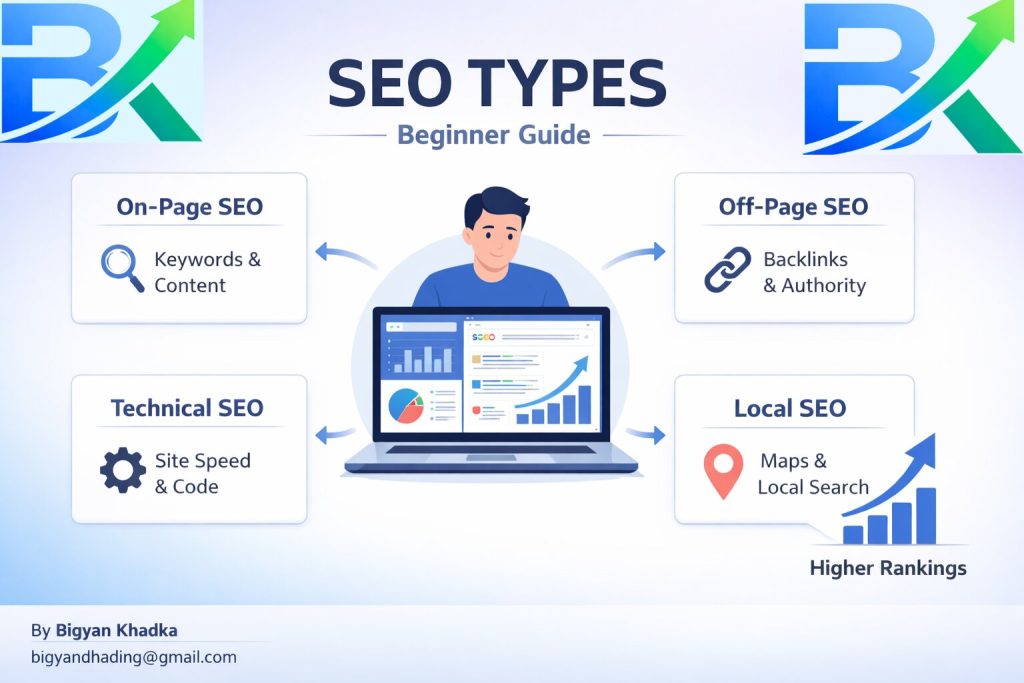
What Does SEO Mean and Why Should You Care?
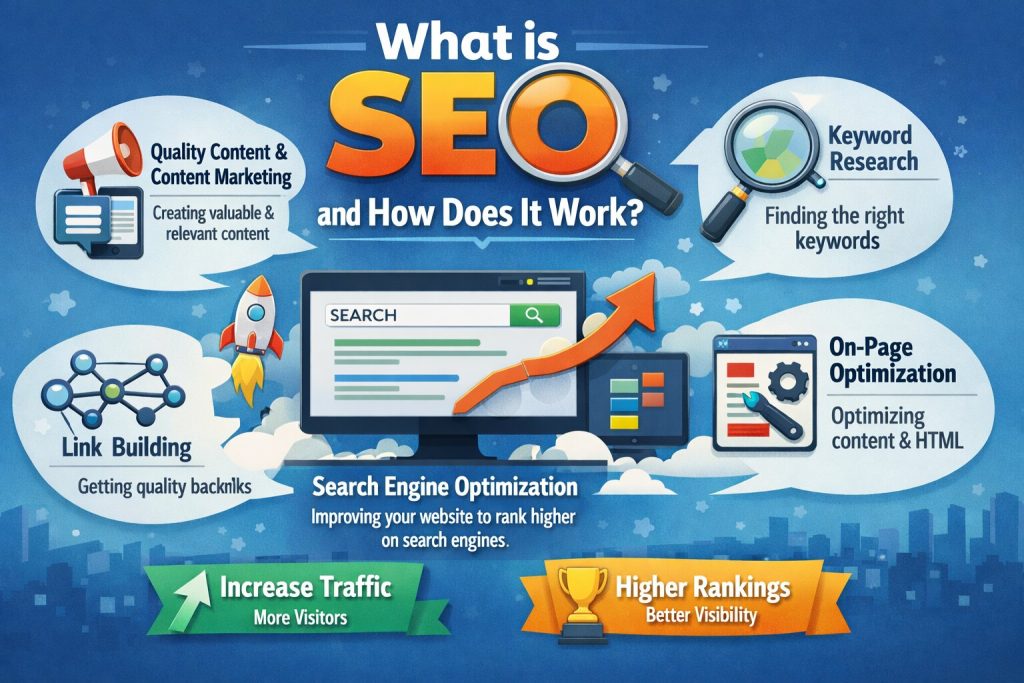
SEO stands for Search Engine Optimization. It’s the practice of making your website easier for search engines like Google to understand and rank. When you optimize your site, you increase the chances that people will find you when they search for topics related to your business or blog.
👉 Learn how SEO helps your website grow:
https://bigyankhadkacom.com/seo-for-beginners/
But why is SEO important for websites in practical terms? Because search engines are the primary way people discover new information. According to data from BrightEdge, over 68% of online experiences begin with a search engine. If your site isn’t optimized, you’re essentially invisible to that massive audience.
I learned this the hard way. My first blog was a personal finance site. I wrote a detailed article about saving for retirement, but I never thought about the words people actually typed into Google. As a result, my article sat on page 10 for months. After learning the basics and grasping why SEO is important for websites, I tweaked that article and it climbed to the top 3, now bringing in hundreds of visitors every month.
SEO Brings Free, Consistent Traffic (My Personal Story)
One of the most compelling reasons why SEO is important for websites is that it delivers free, ongoing traffic. Unlike paid ads that stop the moment you stop paying, SEO builds a lasting asset.
I remember the first time I saw an article of mine rank on the first page of Google. It was a simple guide on “how to save money on groceries.” I had done some basic keyword research, used the phrase naturally, and made sure my content was helpful. A few weeks later, I checked my analytics and saw a steady stream of visitors from search engines.
That article still brings in traffic two years later. I’ve never paid a cent to promote it. That’s the power of SEO: one piece of content can work for you indefinitely. This experience taught me firsthand why SEO is important for websites. It’s not about tricking Google—it’s about connecting with people who are already looking for what you offer.
👉 For authoritative SEO reference, check this guide:http://Moz Beginner’s Guide to SEO
How SEO Builds Trust and Credibility
Trust is hard to earn online. When your site appears on the first page of Google, it sends a powerful signal to users: “This site is credible.” Most people instinctively trust Google’s top results more than the ones on page three.
But SEO builds trust in another way too: it forces you to create content that genuinely answers questions. Google’s algorithms are getting smarter at rewarding high‑quality, user‑focused content. So by following SEO best practices, you’re actually improving the quality of your site.
To ensure my content meets high standards, I follow the E‑E‑A‑T principles—Experience, Expertise, Authoritativeness, and Trustworthiness. These are the qualities Google looks for in content. For example, in this article, I’m sharing my personal experience (Experience) along with researched facts (Expertise). I link to authoritative sources (Authoritativeness) and am transparent about my journey (Trustworthiness). All of this reinforces why SEO is important for websites beyond just traffic numbers.
When you genuinely help people, they trust you. And when they trust you, they’re more likely to return, share your content, and even buy from you. This is why SEO is important for websites in the long run.
SEO Helps You Understand Your Audience Better
Keyword research—the foundation of SEO—is essentially a window into your audience’s mind. By analyzing what people search for, you learn their questions, fears, and desires.
I discovered this when I ran a food blog. Initially, I wrote recipes I thought were interesting. But after doing keyword research, I found that people were searching for “15‑minute healthy dinners” and “gluten‑free desserts for beginners.” Those became my most popular posts because they matched what people actually wanted.
Understanding your audience is one of the hidden reasons why SEO is important for websites. It transforms you from a random content creator into a problem‑solver your audience trusts.
You can use free tools like Google Search Console and AnswerThePublic to discover exactly what your audience is asking. Those insights are gold.

Good SEO Creates a Better User Experience
Many people think SEO is just about keywords, but modern SEO is deeply connected to user experience (UX). Search engines prioritize sites that load fast, are easy to navigate, and display well on mobile devices.
When I redesigned my site to improve loading speed and mobile responsiveness, I saw two benefits: my bounce rate dropped, and my rankings improved. That’s because Google wants to send users to sites that give them a good experience.
This is another reason why SEO is important for websites: it pushes you to make your site more user‑friendly. A clean structure, clear headings, fast loading, and intuitive navigation benefit both your visitors and your search rankings. So when people ask why SEO is important for websites, I always point to the user experience angle.
👉 Understand Google SEO basics and how search engines work:
https://bigyankhadkacom.com/google-seo-basics/
SEO Gives You a Competitive Edge
Your competitors are probably already investing in SEO. If you ignore it, you’re handing them an advantage. But if you embrace SEO, you can level the playing field.
I remember when a competitor with a similar domain age started outranking me on a key topic. Instead of getting frustrated, I analyzed their content, saw they had better keyword placement and internal linking, and improved my own article. Within a month, I reclaimed the top spot.
That’s why why SEO is important for websites isn’t just about visibility—it’s about staying relevant in a crowded market. With good SEO, even a small blog can outrank bigger sites by being more helpful and better optimized.
SEO is Cost‑Effective Compared to Paid Ads
Paid advertising can bring quick traffic, but it’s expensive and stops working the moment your budget runs out. SEO, on the other hand, requires an upfront investment of time and effort, but the returns compound over time.
I’ve spent hundreds on Facebook ads that generated a few clicks, while an SEO‑optimized article I wrote years ago still brings in visitors daily. The long‑term value of SEO far outweighs the short‑term buzz of ads.
For small businesses and bloggers, this is why SEO is important for websites. It’s one of the few marketing channels that offers a positive ROI over the long haul without recurring costs.
👉 For authoritative SEO reference, check this guide:http://Google Search Central .
SEO Works 24/7 (Even While You Sleep)
Unlike social media posts that get buried in feeds within hours, an SEO‑optimized page can attract visitors for years. I once wrote a guide on “how to start a podcast” that took a few months to rank, but now it gets hundreds of visitors a month while I sleep.
This passive traffic is a game‑changer. Once you have a library of well‑optimized content, your website becomes an asset that continuously works for you. That’s perhaps the most powerful reason why SEO is important for websites.
How to Start with SEO: A Simple Roadmap
If you’re convinced about why SEO is important for websites, you might be wondering how to start. Here’s a simple roadmap I give to beginners:
👉 Explore types of SEO and how they impact ranking:
https://bigyankhadkacom.com/types-of-seo/
- Set up Google Search Console – This free tool shows you what keywords you already rank for.
- Do basic keyword research – Use Google Autocomplete, AnswerThePublic, and Ubersuggest to find terms your audience uses.
- Optimize your content – Include your main keyword in the title, a subheading, the URL, and naturally throughout the text. Remember why SEO is important for websites as you create each piece.
- Improve technical SEO – Ensure your site is fast, mobile‑friendly, and easy to crawl.
- Build quality backlinks – Guest post, collaborate, and create link‑worthy content.
- Be patient and consistent – SEO takes time. Keep creating helpful content, and the results will come.
Final Thoughts
Final Thoughts: SEO is an Investment, Not an Expense
When I reflect on my journey, I realize that learning why SEO is important for websites was the turning point. It transformed my site from a hidden corner of the internet into a valuable resource that people actively find and use.
SEO is not about gaming search engines — it’s about creating high-quality content that improves user behavior, increases click-through rate (CTR), and builds long-term trust. By focusing on quality, relevant keywords, and backlinks, you help search engines understand your content better and rank it higher.
It also aligns with the principles of E-E-A-T (Experience, Expertise, Authority, Trust), rewarding websites that provide real value to users.
So whether you are building a blog, an online store, or a business website, invest in SEO with consistency. When combined with strong content, proper keyword strategy, and quality backlinks, SEO becomes a powerful growth engine that delivers long-term results.
SEO is not a cost — it is a long-term investment in growth, visibility, and success. 🚀

Pingback: SEO for Beginners: Simple Guide to Rank on Google
Pingback: Google SEO Basics: How Search Engines Work (Complete Beginner Guide) - Bigyan khadka blog
Pingback: 7 Smart Ways to Find Low Competition Keywords (Rank Fast Guide for Beginners)
Pingback: 7 Powerful Long-Tail Keywords for Beginners to Get Traffic Fast
Pingback: 7 Powerful Reasons Long-Tail Keywords for Beginners Work | Rank Faster
Pingback: 9 Proven Keyword Research for Beginners Steps (Simple & Powerful Guide)
Pingback: Types of SEO Explained for Beginners (Simple 2026 Guide)