
By Bigyan Khadka
Introduction
What is SEO, and why is it important for websites today? If you have ever created a website or blog, your goal is to make sure people can find your content on Google.
However, millions of websites exist on the internet, and without the right strategy, your content can easily get lost. This is where search engine optimization (SEO) becomes important.
SEO helps search engines understand your website and content more clearly. When your content is properly optimized, it becomes easier for people to discover it when they search for relevant topics.
From my experience, websites that focus on clear content, proper structure, and useful information tend to perform better in search results. This is why learning SEO is important for anyone who wants to grow a website.
In this beginner-friendly guide, you will learn the basics of SEO, how it works, and how it can help improve your website visibility and attract more visitors over time.
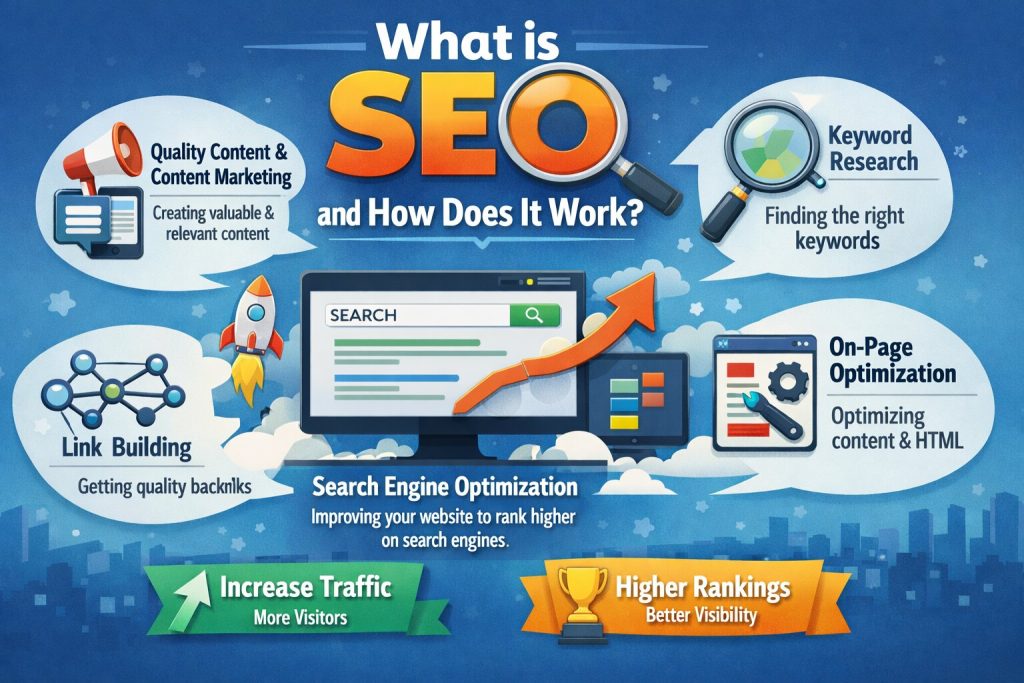
Search engine optimization (SEO) is an essential process for improving your website’s visibility on search engines. Learning SEO helps you understand how to create content that can rank on Google and attract more visitors.
For beginners, SEO is not just about adding keywords. It is about creating helpful, well-structured, and easy-to-read content that matches what users are searching for. When you apply SEO correctly, your website has a better chance of appearing in search results.
From my experience, focusing on SEO from the beginning can make a big difference in your website growth. Small improvements in SEO can lead to better rankings over time.
Why SEO is Important
Many beginners underestimate the power of SEO. However, SEO can make a huge difference in the growth of a website.
For SEO for beginners, learning basic SEO techniques can help bring more visitors to a website without paying for ads.
1. SEO Brings Free Traffic
When your website appears on Google search results, people can visit your site without you paying for advertisements. This type of traffic is called organic traffic.
Over time, organic traffic can become one of the biggest sources of visitors for your website.
If you are new to SEO, you can start with this beginner guide to learn the basics:
👉 SEO for Beginners: Simple Guide to Rank on Google
https://bigyankhadkacom.com/seo-for-beginners
2. SEO Builds Trust
People trust search engines. If Google shows a website on the first page, users often believe that the site is reliable and useful.
This trust can help your website build a good reputation.
3. SEO Helps Long-Term Growth
Unlike advertisements that stop working when you stop paying, SEO can continue bringing visitors for a long time.
A well-optimized article can attract traffic for months or even years.
Step 1: Crawling
Crawling is the process where search engine bots scan the internet to discover new pages.
They move from one page to another through links.
If your website has good internal links and connections with other websites, it becomes easier for search engines to find your content.
Step 2: Indexing
After discovering a page, search engines try to understand its content.
They analyze the text, images, headings, and structure of the page. Then they store this information in a large database called the index.
You can imagine the index as a giant digital library containing billions of web pages.
Step 3: Ranking
When someone searches for something on Google, the search engine quickly looks through its index to find the most relevant pages.
Google uses complex algorithms to decide which pages should appear first.
The pages that provide helpful, clear, and trustworthy information usually rank higher.
SEO focuses on improving your website so it becomes one of those top results.
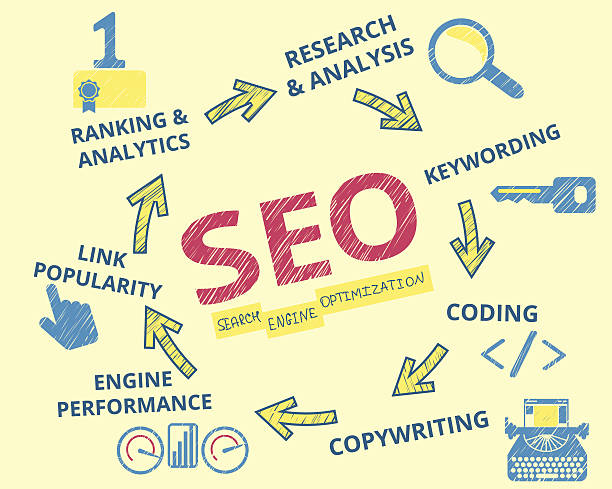
Types of SEO
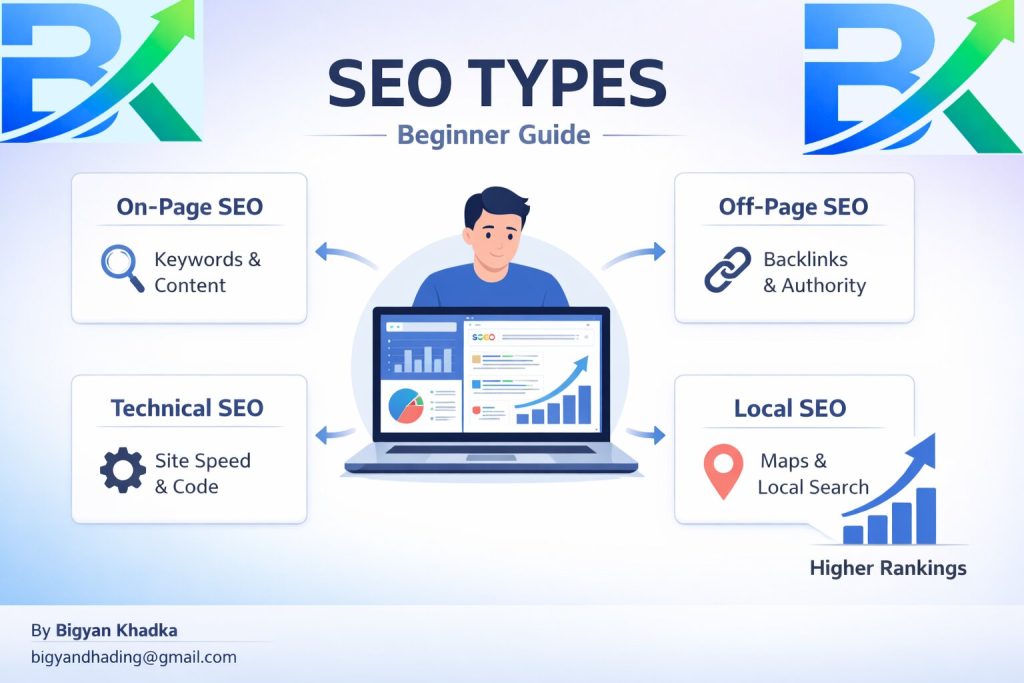
SEO is usually divided into three main areas.
On-Page SEO
Explore additional insights at the Search Engine Journal SEO Guide.
On-page SEO refers to the improvements you make directly on your website.
These improvements help search engines understand your content better.
Important on-page SEO factors include:
Keywords
Keywords are the words people type into search engines. Using the right keywords in your content helps search engines understand your topic.
Title Tags
The title tag is the clickable headline that appears in search results. A clear and relevant title can improve both ranking and click rates.
Headings
Using headings like H1, H2, and H3 helps organize your content and makes it easier for readers to understand.
Quality Content
High-quality content is the foundation of SEO. Articles that provide useful information tend to perform better in search results.
Internal Links
Internal links connect one page of your website to another page. They help search engines crawl your website and help users discover more content.
Off-Page SEO
Off-page SEO focuses on activities that happen outside your website.
The most important part of off-page SEO is backlinks.
A backlink is created when another website links to your page.
Search engines consider backlinks as signals of trust. If multiple websites link to your content, it suggests that your content is valuable.
However, quality matters more than quantity. A few links from trusted websites are much more valuable than many links from low-quality sites.

Technical SEO
Technical SEO focuses on improving the technical performance of your website.
Important technical factors include:
- Fast website loading speed
- Mobile-friendly design
- Secure connection (HTTPS)
- Clean website structure
A technically well-optimized website helps search engines crawl and index pages more efficiently.
How Long Does SEO Take?
SEO is not an instant process.
Most websites start seeing noticeable results after three to six months of consistent work.
SEO is similar to growing a plant. First, you prepare the soil, plant seeds, and take care of them regularly. Over time, the plant grows stronger.
The same happens with SEO.
When you continuously publish helpful content and improve your website, search engines gradually recognize your effort.
Simple SEO Tips for Beginners
If you want to learn more about SEO basics, check the official guide from
http://Google Search Central .
If you are just starting with SEO, here are a few simple tips.
- Focus on solving real problems for your readers.
- Choose clear and relevant keywords for your articles.
- Write content that is easy to read and understand.
- Use headings to organize your article.
- Publish content consistently.
These small steps can make a big difference over time.
Conclusion
SEO is a long-term strategy that helps websites grow steadily over time. From my experience, websites that focus on helpful content and proper optimization tend to perform better in search results.
Learning SEO is not about quick results. It is about consistency, practice, and continuous improvement. As you create more valuable content, search engines begin to recognize your efforts and reward your website with better visibility.
Even if you are a beginner, you can succeed in SEO by following the right steps and staying consistent. Every small improvement you make today contributes to your future growth.
Start with the basics, keep learning, and focus on creating content that truly helps your audience.
Conclusion
SEO is a long-term strategy, and using SEO correctly can help your website grow steadily. By learning and applying SEO step by step, you can improve your content and increase your chances of ranking on Google.

Pingback: Why SEO is Important for Websites (Beginner Guide)
Pingback: Types of SEO Explained for Beginners (Simple 2026 Guide)
Pingback: SEO for Beginners: Simple Guide to Rank on Google
Pingback: 7 Smart Ways to Find Low Competition Keywords (Rank Fast Guide for Beginners)
Pingback: 9 Proven Keyword Research for Beginners Steps (Simple & Powerful Guide)
Pingback: 7 Powerful Reasons Long-Tail Keywords for Beginners Work | Rank Faster
Pingback: How to Optimize Titles and Meta Descriptions: 7 Powerful & Easy Ways to Boost CTR