
In this guide, you will learn SEO writing tips for beginners that actually work in real blogging.
Let’s be honest—writing blog posts that nobody reads is one of the most frustrating feelings you can experience as a beginner. You spend hours researching, writing, editing, and trying to make everything perfect… and still, nothing happens. No traffic. No clicks. No comments. Just silence. It feels like you’re talking to a wall, hoping someone, somewhere, will finally notice your work. And after a while, it starts to affect you. You begin to question everything—“Is my content not good enough? Am I missing something important?”
If you’re just starting out, make sure to read my https://bigyankhadkacom.com/keyword-research-for-beginners/to understand how to find low-competition keywords.
🔥 Why You Can’t Just “Write What You Feel” Anymore (The Hard Truth)
Look, I get it. Creative freedom feels amazing.
Writing whatever comes to your mind… expressing your ideas… telling your story…
That’s why most of us start blogging in the first place.
But here’s the truth nobody tells you:
👉 The internet is louder than ever.
Every single day, billions of searches happen on Google. And for every topic you write about, there are already thousands of blog posts competing for attention.
So if you just write whatever you feel…
👉 Your content doesn’t get seen.
Not because it’s bad.
But because it’s not aligned with what people are searching.
To get your voice in front of real readers…
👉 You need to meet Google halfway.
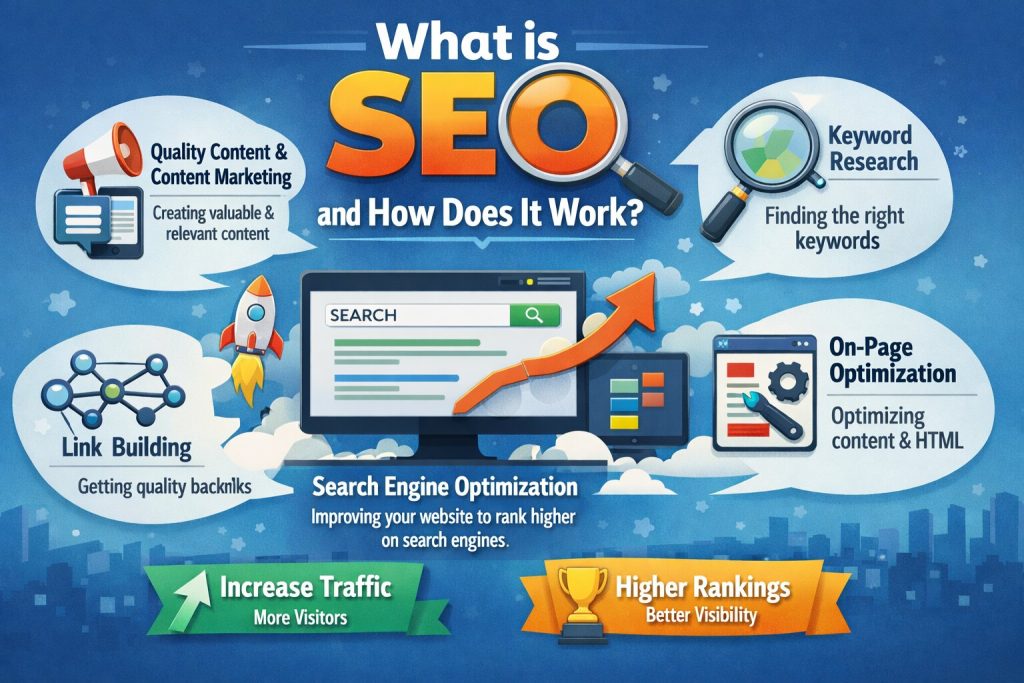
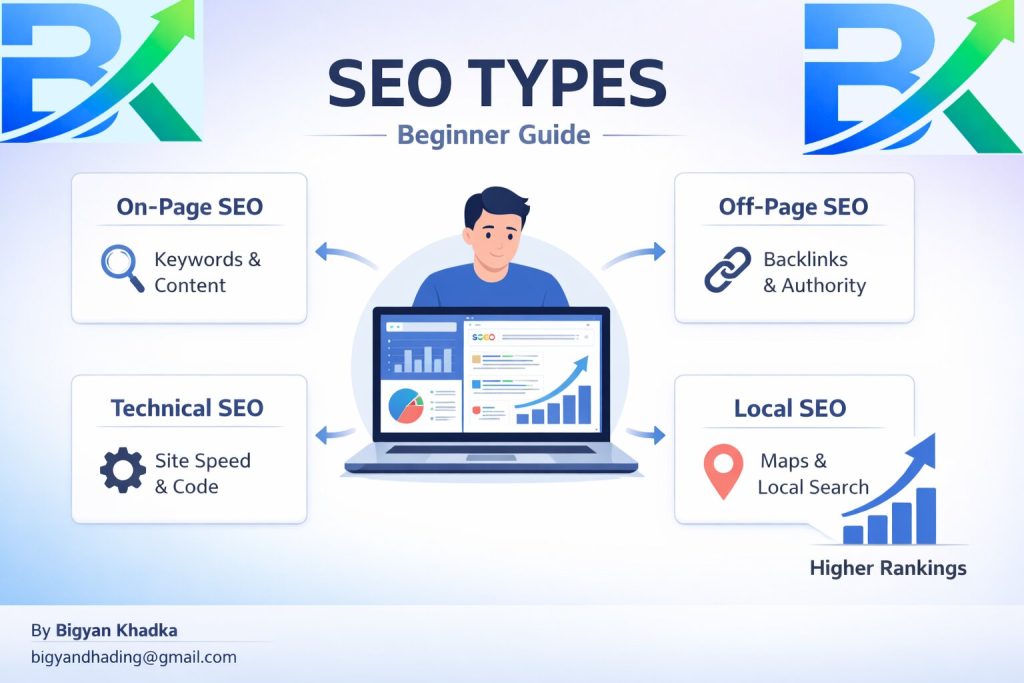
💡 What SEO Really Means (Simple Version)
This is where SEO content writing tips for beginners actually matter.
And no—it’s not about tricks or hacks.
👉 It’s about clarity
👉 It’s about structure
👉 It’s about helping people
Think of Google like a librarian.
When someone asks a question, the librarian wants to give them:
✔ The most useful answer
✔ The most relevant content
✔ The clearest explanation
Not the longest post.
Not the fanciest design.
👉 Just the most helpful one.
Your job?
👉 Write that answer.
🧠 The SEO Mindset Shift Every Beginner Must Make
Before learning how to write…
You need to fix how you think.
Because most beginners make the same mistake I did.
They chase big keywords.
❌ Old Mindset:
“I want to rank for ‘CRM tools’ because 10,000 people search it.”
New SEO Mindset:
“I want to answer:
👉 ‘What CRM is best for a solopreneur?’”
See the difference?
One is broad.
One is specific.
And SEO rewards specificity.
🎯 Why User Intent Matters More Than Volume
High search volume looks attractive.
But it doesn’t guarantee traffic.
👉 User intent does.
User intent = why someone is searching
Are they:
✔ Learning something?
✔ Comparing options?
✔ Ready to buy?
If your content doesn’t match that intent…
👉 It won’t rank (or convert).
💡 My Personal Turning Point
I struggled with this for months.
I chased big keywords.
I wrote long posts.
I got zero results.
Then I switched focus:
👉 I stopped chasing keywords
👉 I started solving real problems
And everything changed.
Traffic didn’t come from volume…
👉 It came from relevance.
🚀 My 12-Step SEO System (What Actually Worked)
After a lot of trial and error, I built a simple system.
No guesswork.
No random writing.
Just a clear process that brings results.
I’ve broken it into 3 parts:
✔ Before You Write
✔ While You Write
✔ After You Publish
🧩 Part 1: Before You Write (The Foundation)
🔍 Step 1: Become a “Mind Reader” Using Free Tools
You don’t need expensive tools.
You just need to listen.
👉 Use:
- Google autocomplete
- AnswerThePublic
Type a topic… and see what people are searching.
These are real problems.
Not guesses.
💡 Why This Works
These are called long-tail keywords.
✔ Lower competition
✔ Higher intent
✔ Better conversion
🧠 Real Example
I once searched:
👉 “how to bake sourdough”
Nothing worked.
Then I typed:
👉 “why is my sourdough…”
And found:
✔ too sticky
✔ not rising
✔ dense texture
I created content around these.
👉 That post now gets consistent traffic every month.
🎯 Step 2: Stop Chasing High Volume (Go Specific)
This was my biggest mistake.
I tried ranking for “SEO.”
Impossible.
Too competitive.
Instead, I switched to:
👉 “SEO content writing tips for beginners”
And things started working.
💡 Why Long-Tail Wins
✔ Easier to rank
✔ More targeted audience
✔ Faster results
📊 Real Result
“Digital marketing” → No ranking
“Digital marketing for small bakery” → Page 1
👉 Specific always wins.
🏗️ Step 3: Learn From What’s Already Ranking
Before writing anything, I search my keyword.
Then I study the top 3 results.
I ask:
✔ What did they do well?
✔ What’s missing?
✔ How can I do better?
This is called the Skyscraper Technique.
🔥 Simple Rule
Don’t copy.
👉 Improve.
Add more clarity.
Add better examples.
Add real experience.
✍️ Part 2: While You Write (The Craft)
🎯 Step 4: Optimize Title & Meta (Get the Click)
Ranking doesn’t matter if nobody clicks.
👉 CTR (Click-Through Rate) matters.
💡 My Simple Formula
✔ Use numbers
✔ Add emotion
✔ Promise clear benefit
Example:
❌ SEO Tips
✅ 7 Simple SEO Content Writing Tips for Beginners That Actually Boost Traffic
📝 Meta Description Tip
Keep it:
✔ Under 160 characters
✔ Clear + benefit-focused
Example:
👉 “Struggling to rank? Learn simple SEO tips that boosted my traffic fast.”
🧑💻 Step 5: Write for Humans First
Don’t write like a robot.
Write like you’re talking to a friend.
✔ Use simple language
✔ Use “you” and “I”
✔ Keep sentences short
💡 My Personal Trick
After writing…
👉 I read it out loud.
If it sounds weird → I fix it.
🏠 Step 6: Structure Your Content (H1, H2, H3)
Think of your blog like a house:
H1 = Main title
H2 = Sections
H3 = Sub-sections
This helps:
✔ Google understand your content
✔ Readers scan easily
⏱️ Step 7: Keep People on Your Page (Dwell Time)
If people leave fast…
👉 Google assumes your content isn’t useful.
🔥 How I Fix This
✔ Start with a strong hook
✔ Use short paragraphs
✔ Add bullet points
✔ Ask questions
✔ Add visuals
🔗 Step 8: Add Internal Links Naturally
Don’t let your posts exist alone.
Link them together.
💡 Why This Works
✔ Improves SEO
✔ Increases time on site
✔ Helps Google understand structure
✔ Simple Rule
Add 3–5 internal links per post.
Before publishing any post, follow my SEO checklist to make sure everything is fully optimized.https://bigyankhadkacom.com/seo-checklist/
⚙️ Part 3: After You Publish (Optimization)
🖼️ Step 9: Optimize Images Properly
Images are powerful—but only if optimized.
🔧 My Simple Process
✔ Rename file → “seo-content-writing-tips.jpg”
✔ Compress image (use TinyPNG)
✔ Add alt text
💡 Example Alt Text
👉 “Infographic showing SEO content writing tips for beginners”
📌 Bonus Tip
Add a caption.
It improves engagement.
⚡ Final Thought
SEO is not complicated.
It’s just:
👉 Understanding people
👉 Creating helpful content
👉 Structuring it properly
Do this consistently…
👉 And traffic will follow.
Step 10: Improve Page Speed (Even Small Wins Matter)
If your page takes more than 5 seconds to load… most visitors are gone.
Page speed directly affects rankings—especially on mobile.
👉 Quick fixes:
✔ Compress images (biggest impact)
✔ Use caching plugin (WordPress: W3 Total Cache / WP Rocket)
✔ Choose fast hosting (I switched to Cloudways → load time improved fast)
👉 Don’t overthink it:
Run your site on Google PageSpeed Insights and follow the suggestions.
📊 Step 11: Track What Actually Works
Most beginners skip this—and stay stuck.
Use Google Search Console to track:
✔ Keywords bringing impressions
✔ CTR (click-through rate)
✔ Ranking positions
👉 Simple strategy:
If your post is ranking on page 2 (positions 11–20):
✔ Improve title
✔ Rewrite meta description
✔ Fix intro
That alone can push it to page 1.
💡 Real result:
Position 14 → Position 8
(Only changed the title)
🔄 Step 12: Refresh Old Posts (Traffic Booster)
Publishing is not the end.
Content loses traffic over time—but you can fix it.
👉 Every 3–6 months:
✔ Update stats & examples
✔ Add new sections (FAQs, mistakes)
✔ Refresh publish date
✔ Re-share content
💡 Real example:
50 visits/month → 400 visits/month
(After just 30 minutes update)
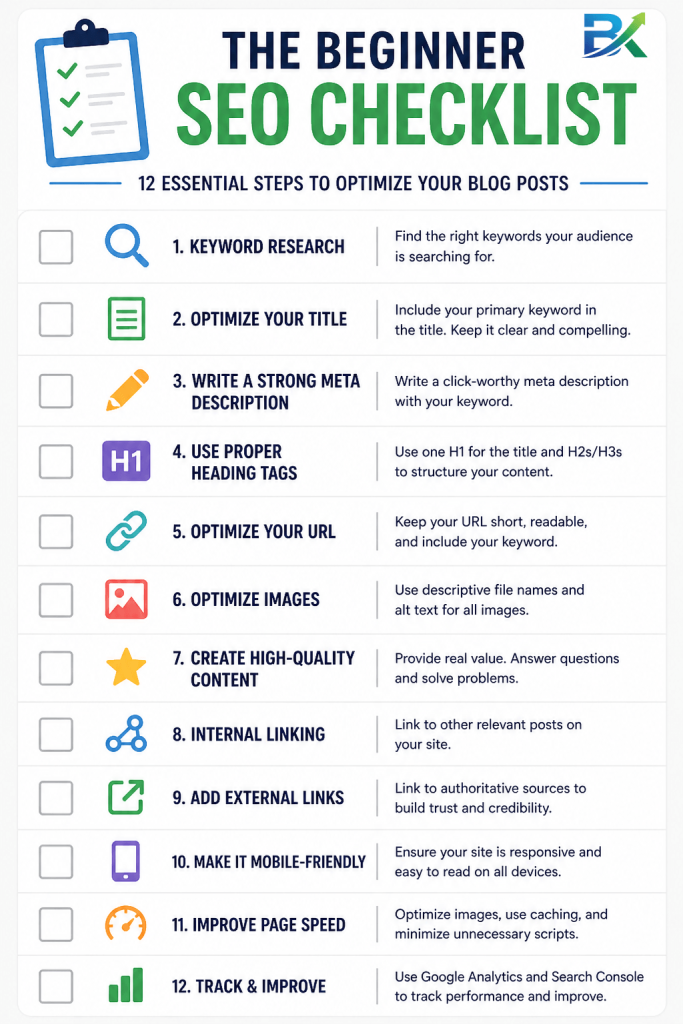
Quick On-Page SEO Checklist (Save This)
Before publishing, check:
✔ Long-tail keyword selected
✔ Search intent matched
✔ Strong CTR title
✔ Meta description (under 160 chars)
✔ Competitor gap covered
✔ Proper H1 → H2 → H3 structure
✔ 3–5 internal links added
✔ Images optimized (name + alt text)
✔ Page speed checked
✔ CTA included
✔ Update reminder set (3–6 months)
⚡ Final Insight
SEO is not just about writing once.
👉 It’s about improving, tracking, and updating.
Do this consistently…
👉 And your traffic will grow without writing more posts.
🚫 Common Mistakes I Made (So You Don’t Have To)
Let me be completely honest with you.
I didn’t figure this out overnight.
I made mistakes… a lot of them.
Some of them cost me months of time.
Some of them cost me traffic I didn’t even realize I was losing.
But every mistake taught me something important.
And if you avoid these, you’ll move 10x faster than I did.
❌ Mistake #1: Ignoring “Decaying” Traffic
This one hurt the most.
I used to think once a blog post was published, the job was done.
It’s not.
Content decays over time. Rankings drop. Traffic slowly disappears.
And I didn’t even notice it happening.
I lost hundreds of visitors simply because I never updated my old posts.
Now?
👉 I review my top posts every 3 months
👉 I update stats, examples, and headlines
👉 I refresh content to stay relevant
And guess what?
👉 Old posts start ranking again.
Lesson:
Publishing is not the end. It’s just the beginning.
❌ Mistake #2: Focusing on Keywords, Not Problems
This mistake completely changed how I think.
I used to chase keywords like:
👉 “Email marketing software”
Sounds good, right?
But it failed.
Why?
Because it was too broad. No clear intent.
Then I rewrote it like this:
👉 “What email marketing software is best for a small bakery?”
That post took off.
Why?
Because it solved a specific problem for a specific person.
Lesson:
Don’t target keywords.
👉 Target real problems.
❌ Mistake #3: Forgetting the Call to Action (CTA)
I used to end my blog posts like this:
👉 “Thanks for reading.”
That’s it.
No direction. No next step. No engagement.
Big mistake.
Now every post ends with something intentional:
✔ A question
✔ A suggestion
✔ A related article
✔ A next action
Because if you don’t guide your reader…
👉 They leave.
Lesson:
Always tell your reader what to do next.
❌ Mistake #4: Obsessing Over Word Count
I used to believe:
👉 “Longer content = better ranking”
So I wrote a 5,000-word article.
Guess what happened?
👉 Nobody read it.
It was too long, too heavy, and honestly… unnecessary.
Now I follow a simple rule:
👉 As long as needed, as short as possible.
Most of my best-performing posts are:
✔ 1,500 – 2,500 words
✔ Clear and easy to read
✔ Straight to the point
Lesson:
Don’t write more.
👉 Write better.
❌ Mistake #5: Ignoring Mobile Users
This is something many beginners ignore.
More than 60% of traffic comes from mobile.
But my early blog?
❌ Tiny text
❌ Huge images
❌ Bad spacing
❌ Hard-to-click buttons
It was a terrible mobile experience.
Once I fixed it:
👉 My mobile traffic doubled in a month.
No new content. Just better usability.
Lesson:
If your blog isn’t mobile-friendly…
👉 You’re losing half your audience.
⚡ Final Takeaway
If I could restart my blogging journey, I would avoid these five mistakes from day one.
Because SEO is not just about writing.
It’s about:
✔ Updating
✔ Understanding people
✔ Guiding readers
✔ Creating better experience
Avoid these mistakes…
👉 And your growth will be much faster than mine.
For deeper keyword research strategies, explore tools and tutorials from Ahrefs:
https://ahrefs.com/blog/keyword-research/
How Long Does SEO Actually Take?
I hate to break it to you, but SEO is a marathon, not a sprint. If you are expecting traffic tomorrow, you will be disappointed.
Realistic Timeline:
- Month 1-3: The “Sandbox.” You are building authority. You might get a few clicks from Bing or long-tail searches. Don’t panic. This is normal.
- Month 4-6: The “Incline.” If you followed the checklist above, you will start seeing steady growth. Maybe 50-200 visitors a month.
- Month 7-12: The “Rollercoaster.” You will have good weeks and bad weeks. You should see significant organic growth by now. 500-2,000 visitors is common for a dedicated beginner.
- Year 2+: The “Snowball.” Older posts accumulate backlinks and authority. Traffic can double or triple without new content.
My Advice: Do not check Google Analytics every hour. It will drive you crazy. Instead, check it once a week. Focus on writing helpful content. The algorithm rewards consistency.These SEO writing tips for beginners are based on real experience and testing.
I remember checking my stats every morning for six months. Most days, nothing changed. It was depressing. Then I stopped. I just focused on writing one good post per week. When I checked again three months later, traffic had grown 400%. Consistency beats intensity.
External Resources to Bookmark
I’ve learned a ton from these two free guides. They’re worth reading when you have time:
- Google’s official SEO Starter Guide – Straight from the source. No fluff, just facts.
- Moz beginner SEO guide – More detailed, with great examples and visuals.
Bookmark them. Read them slowly. Don’t try to absorb everything at once.
Your Action Plan For This Week
You have the knowledge. Now comes the hard part: doing it.
Here is your 3-step plan for the next 7 days:
- Day 1: Brainstorm 5 problems your audience has. Turn those into specific question-based titles using Google Autocomplete.
- Day 2: Pick one keyword. Read the top 3 ranking posts. Find one thing they missed.
- Day 3-5: Write a post using the 12 steps above. Focus on one specific long-tail keyword.
- Day 6: Use the checklist to polish your meta description, headings, images, and internal links.
- Day 7: Hit publish! Then share it on social media or in a relevant community (Reddit, Facebook group, LinkedIn).
Don’t aim for perfect. Aim for done. You can always improve a published post. You can’t improve a post that doesn’t exist.
Let’s be honest—writing blog posts that nobody reads is one of the most frustrating feelings you can experience as a beginner.
You spend hours researching, writing, editing, and trying to make everything perfect… and still, nothing happens.
No traffic. No clicks. No comments.
Just silence.
It feels like you’re talking to a wall—hoping someone, somewhere, will finally notice your work.
And after a while, it starts to get to you.
You begin to question everything:
“Is my content not good enough?”
“Am I doing something wrong?”
“Why is nobody finding my blog?”
I’ve been there.
💡 Why “Just Writing” Doesn’t Work Anymore
n this guide, you will learn SEO writing tips for beginners that actually work in real blogging.
Let’s be honest—writing blog posts that nobody reads is one of the most frustrating feelings you can experience as a beginner. You spend hours researching, writing, editing, and trying to make everything perfect… and still, nothing happens. No traffic. No clicks. No comments. Just silence. It feels like you’re talking to a wall, hoping someone, somewhere, will finally notice your work. And after a while, it starts to affect you. You begin to question everything—“Is my content not good enough? Am I missing something important?”
If you’re just starting out, make sure to read my https://bigyankhadkacom.com/keyword-research-for-beginners to understand how to find low-competition keywords.
🔥 The Real Game-Changer: SEO
This is where everything changed for me.
I discovered search engine optimization (SEO).
At first, it felt complicated. Confusing. Full of technical terms like “backlinks,” “authority,” and “algorithms.”
Honestly, I almost gave up.
But then I realized something simple:
👉 SEO is not about tricking Google.
👉 It’s about understanding people.
🧠 The Simple Mindset Shift That Changed Everything
Instead of asking:
❌ “What do I want to write?”
Start asking:
✅ “What are people actually searching for?”
That one question changed my entire blogging journey.
Because when you align your content with real search intent…
👉 Google starts noticing you
👉 People start clicking
👉 Traffic starts growing
📌 Think of Google Like a Librarian
Here’s the easiest way to understand SEO:
Google is like a librarian.
When someone asks a question, Google wants to show:
✔ The most helpful answer
✔ The most relevant content
✔ The clearest explanation
Not the longest post.
Not the fanciest design.
👉 Just the most useful content.
Your job?
👉 Become that answer.
If you want to learn directly from the source, check out the official SEO Starter Guide by Google:
https://developers.google.com/search/docs/fundamentals/seo-starter-guide
🚀 What Happened When I Applied This
When I stopped guessing and started writing based on real search intent…
Everything changed.
My traffic didn’t just grow…
👉 It multiplied.
In just 90 days, I went from almost zero traffic to consistent organic visitors every single day.
And the best part?
I didn’t use expensive tools.
I didn’t build hundreds of backlinks.
I just followed a simple system.
🎯 What You’ll Learn in This Guide
In this post, I’m going to show you:
✔ How to find blog topics people are already searching
✔ How to write content Google actually ranks
✔ How to improve your CTR (click-through rate)
✔ How to turn zero-traffic posts into traffic magnets
No fluff.
No confusing jargon.
👉 Just simple, practical SEO content writing tips for beginners that actually work.
⚡ Final Thought Before We Start
If your blog feels invisible right now…
It’s not because you’re bad at writing.
👉 It’s because you’re missing the strategy.
And today, we’re fixing that.